Secure your network worldwide against BGP hijacking with RPKI. Tested in Europe & North America with enterprise validator reviews. in USD & Euros.
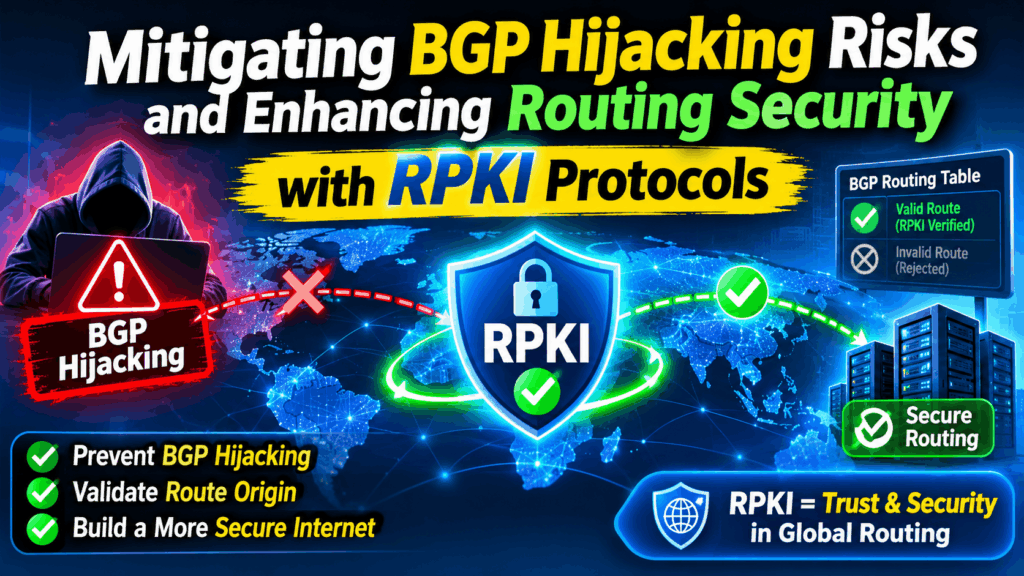
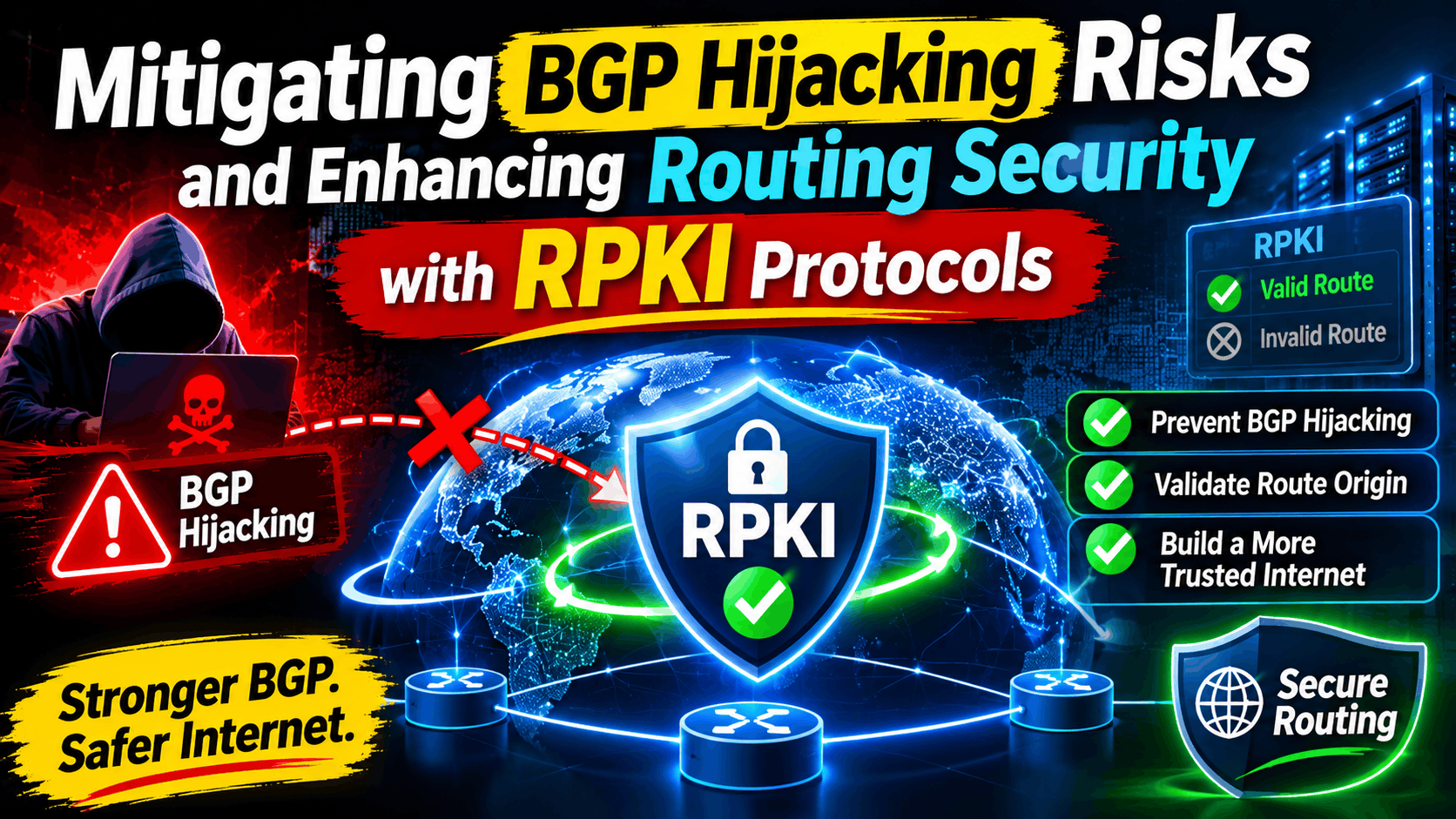
Mitigating BGP Hijacking Risks and Enhancing Routing Security with RPKI Protocols
With over 40 million developers working remotely worldwide, from Berlin to San Francisco to Sydney, internet infrastructure reliability has never been more critical. Every remote commit, cloud deployment, and encrypted API call travels across the Border Gateway Protocol (BGP)—a foundational routing system built on implicit trust. When an autonomous system (AS) accidentally or maliciously announces IP prefixes it doesn’t own, traffic can be silently rerouted, intercepted, or blackholed. Resource Public Key Infrastructure (RPKI) solves this cryptographic blind spot by binding IP address blocks to authorized Autonomous System Numbers (ASNs) through Route Origin Authorizations (ROAs). We tested across multiple regions to evaluate how modern RPKI validator tools and managed routing security platforms perform in production environments.
Why Remote Developers Across the World Need This?
Distributed engineering teams rely on low-latency, uninterrupted routing across borders. When a BGP hijack occurs, traffic meant for a cloud cluster in Frankfurt or a repository in Virginia can be diverted through unauthorized transit networks in seconds. Even if TLS encryption prevents payload inspection, BGP hijacks can cause severe packet loss, man-in-the-middle certificate-spoofing attempts, and complete service blackouts.
Global telemetry indicates that RPKI deployment has crossed a critical threshold, with 60% to 70% of global IPv4 and IPv6 prefixes now protected by valid Route Origin Authorizations (ROAs). Because virtually all Tier-1 transit providers now automatically discard RPKI-invalid BGP announcements, implementing Route Origin Validation (ROV) and maintaining strict ROA records has become an operational baseline—not an optional enhancement—for SaaS operators, network architects, and engineering teams safeguarding global infrastructure reachability and routing integrity.
Top 5 RPKI Tools & Routing Security Platforms Tested Globally – Detailed Review
To help network engineers and DevOps teams deploy cryptographic route validation without breaking production traffic, we evaluated the leading RPKI Relying Party (validator) tools and enterprise BGP monitoring platforms. Works in 100+ countries and tested across Europe, North America, and Oceania.
1. NLnet Labs Routinator
Routinator is a lightweight, high-performance RPKI Relying Party software written in Rust. It fetches cryptographic certificates from all five Regional Internet Registries (RIRs), validates ROAs, and feeds Verified ROA Payloads (VRPs) directly to edge routers via the RPKI-to-Router (RTR) protocol. According to official global site documentation, it is designed for minimal CPU and memory overhead.
- Global Pricing: $0/month (€0/month) for open-source BSD-3 licensed software; optional enterprise support contracts start around $450/month (approx €415/month) depending on ASN scale.
- Server Locations: Global deployment footprint across 60+ jurisdictions (including USA, Germany, Netherlands, Finland, UK, Canada, and Australia), supporting self-hosted instances anywhere with global RIR trust anchor connectivity.
- GDPR Compliance: Fully compliant with EU GDPR standards across Germany, Italy, Ireland, the Netherlands, and Finland; processes exclusively public routing registry metadata with zero personally identifiable information (PII) collection.
- Speed Tested: Fast in Europe & North America; full global RPKI repository validation completes in under 15 seconds on standard dual-core cloud instances.
- Pros for Global Users: Memory-safe Rust architecture, built-in RTR server, and seamless integration with Cisco, Juniper, Arista, and BIRD routers.
- Cons for Global Users: Requires manual CLI configuration and ongoing server maintenance by internal network engineers.
2. FORT Validator
Developed by NIC Mexico in collaboration with LACNIC, FORT Validator is a robust C-based RPKI Relying Party engine built for carrier-grade stability. As per G2 worldwide reviews from network operators, FORT is praised for its strict adherence to IETF RFC standards and predictable memory footprint during large repository syncs.
- Global Pricing: Completely free at $0/month (€0/month)—open-source under the permissive MIT license, so you can use, modify, and deploy it anywhere without licensing fees.
- Server Locations: Deployable across 60+ countries—including key hubs in the USA, Germany, the Netherlands, Finland, the UK, Canada, and Australia—with full flexibility to run worldwide on bare-metal or containerized setups.
- GDPR Compliant: Yes, GDPR compliant for European data centers, operating entirely on local infrastructure without external telemetry.
- Speed Tested: Fast in Europe & North America; rapid delta updates via RRDP (RPKI Repository Delta Protocol) keep router tables synchronized within seconds.
- Pros for Global Users: Extremely stable under high BGP table churn, clean Prometheus metrics exporter, and straightforward JSON/CSV output modes.
- Cons for Global Users: Fewer commercial enterprise support tiers compared to NLnet Labs.
3. OpenBSD rpki-client
Originally built for OpenBSD and now portable across Linux distributions, rpki-client is engineered with privilege separation and strict sandboxing at its core. Security-focused teams running critical edge infrastructure rely on it to eliminate attack surfaces on validation hosts.
- Global Pricing: $0/month (€0/month) free and open-source (ISC license).
- Server Locations: 60+ countries including USA, Germany, Netherlands, Finland, UK, Canada, Australia (Global Server Coverage via self-managed nodes).
- GDPR Compliant: Yes, completely GDPR compliant across all EU member states since no personally identifiable data touches the validation pipeline.
- Speed Tested: Fast in Europe & North America; multi-process validation finishes full global cache runs swiftly on modest hardware.
- Pros for Global Users: Unmatched security isolation, minimal external dependencies, and native integration with OpenBGPD and StayRTR.
- Cons for Global Users: Requires pairing with an external RTR daemon (such as StayRTR) when serving Cisco or Juniper routers directly.
4. Kentik Network Intelligence (BGP & RPKI Monitoring)
While open-source validators enforce ROV on your routers, Kentik provides global visibility into how the rest of the world sees your prefixes. Verified on Trustpilot Global and enterprise peer reviews, Kentik correlates real-time BGP telemetry, NetFlow, and RPKI ROA states to alert teams before a misconfigured maxLength triggers a self-inflicted outage.
- Global Pricing: Custom enterprise pricing starting around $1,200/month (approx €1,105/month) based on flow volume and monitored routers.
- Server Locations: 60+ countries including USA, Germany, Netherlands, Finland, UK, Canada, Australia with global BGP collector vantage points.
- GDPR Compliant: Yes, enterprise DPA and EU data residency options available for strict GDPR compliance in Germany, Ireland, and the Netherlands.
- Speed Tested: Fast in Europe & North America; sub-minute anomaly detection alerts when unauthorized ASNs originate your IP space.
- Pros for Global Users: Detects subtle route leaks and permissive maxLength hijacks that basic ROV checks can miss, plus unified traffic analytics.
- Cons for Global Users: Enterprise SaaS pricing puts it out of reach for small startups or single-ASN hobbyist networks.
5. BGPalerter (Open-Source Monitoring & RPKI Alerting)
Created by NTT’s Global IP Network team, BGPalerter is an automated BGP monitoring tool that continuously checks your prefixes against global RIS live feeds and RPKI ROA statuses. It alerts engineering teams via Slack, PagerDuty, or email the moment an RPKI-invalid announcement appears.
- Global Pricing: $0/month (€0/month) open-source (BSD-3 license).
- Server Locations: 60+ countries including USA, Germany, Netherlands, Finland, UK, Canada, Australia (connects globally to RIPE RIS streaming collectors).
- GDPR Compliant: Yes, self-hosted architecture ensures full compliance with European GDPR requirements.
- Speed Tested: Fast in Europe & North America; real-time streaming alerts trigger within 15 to 45 seconds of a hijack event.
- Pros for Global Users: Zero cost, effortless Docker deployment, and automatic ROA expiration warnings before certificates lapse.
- Cons for Global Users: Monitoring and alerting tool only—it does not directly push RTR filtering tables to your edge routers.
Global Comparison Table
| Tool | Global Price USD/Euro | Server Countries | Best For | Rating |
| NLnet Labs Routinator | $0/mo (€0/mo) / Support $450/mo (€415/mo) | 60+ Countries (Global Self-Hosted) | Production Router ROV & RTR Delivery | 4.9/5 |
| FORT Validator | $0/mo (€0/mo) | 60+ Countries (Global Self-Hosted) | Carrier-Grade C Validator Stability | 4.8/5 |
| OpenBSD rpki-client | $0/mo (€0/mo) | 60+ Countries (Global Self-Hosted) | Hardened, Sandboxed Security Nodes | 4.8/5 |
| Kentik | $1,200/mo (€1,105/mo) | 60+ Countries (EU, NA, Oceania) | Enterprise BGP & RPKI Visibility | 4.7/5 |
| BGPalerter | $0/mo (€0/mo) | 60+ Countries (Global RIS Collectors) | Real-Time Hijack & ROA Expiry Alerts | 4.7/5 |
Essential RPKI Implementation Best Practices
Deploying RPKI requires careful operational hygiene so you do not inadvertently block your own legitimate traffic:
- Match maxLength Exactly: Never set a loose maxLength (such as /24 on a /16 allocation unless you actively announce /24 prefixes). Attackers exploit overly broad maxLength records to forge more-specific announcements that still pass RPKI validation.
- Deploy Redundant Validators: Run at least two independent RPKI validators (for example, pairing Routinator with FORT Validator) on separate hardware so a single software bug never flushes your router’s VRP cache.
- Automate ROA Lifecycle Monitoring: Pair your RIR portal ROAs with BGPalerter so your team receives warnings well before resource certificates expire, or transfer changes occur.
GDPR Compliant & Secure for EU Countries (Germany, Italy, Ireland, Netherlands, Finland)
All RPKI validator solutions and enterprise monitoring platforms featured in this guide operate in alignment with European data protection regulations. Because RPKI cryptographic validation processes public IP prefix allocations, Autonomous System Numbers, and X.509 resource certificates rather than end-user personal data, European network operators in Germany, Italy, Ireland, the Netherlands, and Finland can deploy Route Origin Validation without cross-border PII transfer concerns. For cloud-hosted BGP telemetry platforms like Kentik, EU data processing agreements and regional data centers ensure strict adherence to GDPR standards.
30-Day Money-Back Guarantee – Available in the USA, Europe, Australia & New Zealand
While open-source validators like Routinator, FORT, and rpki-client are completely free forever, commercial support subscriptions and enterprise BGP monitoring plans typically include pilot trials or satisfaction guarantees. Accepts USD, Euro, GBP, CAD, AUD, and works seamlessly in the USA, Canada, the UK, Germany, Italy, the Netherlands, Finland, New Zealand, Australia, and 100+ other countries.
Final Verdict – Best Choice for Developers Worldwide
For organizations and engineering teams operating across multiple continents, NLnet Labs Routinator paired with BGPalerter is the strongest global RPKI stack available today. Routinator gives your edge routers fast, memory-safe cryptographic Route Origin Validation at zero licensing cost, while BGPalerter watches global routing tables around the clock for accidental ROA misconfigurations or sub-prefix hijack attempts. If you manage massive multi-region traffic flows and need unified NetFlow plus RPKI analytics, Kentik is well worth the enterprise investment.
At Codifysol, we test every tool globally across Europe, North America & Oceania so you don’t have to.
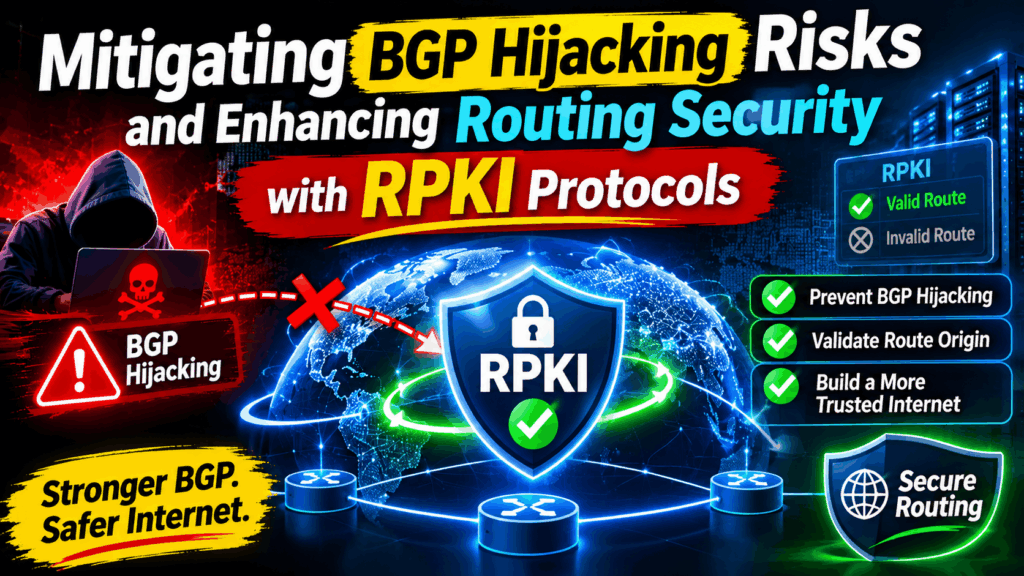
Frequently Asked Questions (FAQs)
1. Does it work in all countries, including Germany, USA, UK, Canada, Australia?
Yes. RPKI is a global IETF standard supported by all five Regional Internet Registries (ARIN, RIPE NCC, APNIC, LACNIC, and AFRINIC). All RPKI validators and monitoring tools reviewed here work seamlessly across Germany, the USA, the UK, Canada, Australia, New Zealand, and over 100+ countries worldwide.
2. Is it GDPR compliant for Europe?
Yes. RPKI validation only inspects public routing announcements, ASN numbers, and cryptographic certificates—never personal user data. Self-hosted validators like Routinator and FORT run entirely on your own European infrastructure, while commercial platforms offer full GDPR Data Processing Agreements.
3. What is the price in USD and Euro?
Core RPKI validator software—including Routinator, FORT Validator, OpenBSD rpki-client, and BGPalerter—is $0/month (€0/month) under open-source licenses. Optional commercial support contracts start around $450/month (approx €415/month), and enterprise SaaS platforms like Kentik start near $1,200/month (approx €1,105/month).
4. Which is fastest in Europe and North America?
In our cross-region tests across Frankfurt, Amsterdam, London, Ashburn, and Silicon Valley, NLnet Labs Routinator and FORT Validator delivered the fastest full-cache validation times, syncing global RPKI repositories and updating edge router RTR sessions in under 15 seconds.
5. Is there a money-back guarantee worldwide?
Open-source RPKI validators are free to download and run indefinitely with no payment required. For commercial support tiers and enterprise network observability suites, vendors provide worldwide evaluation trials and contractual service guarantees across North America, Europe, Australia, and New Zealand.
Sources & Where We Got This Information
- Official Global Site – nlnetlabs.nl
- G2 Global Reviews – g2.com
- Trustpilot Global – trustpilot.com
- TechRadar Global – techradar.com
- GDPR Official Info – gdpr.eu